
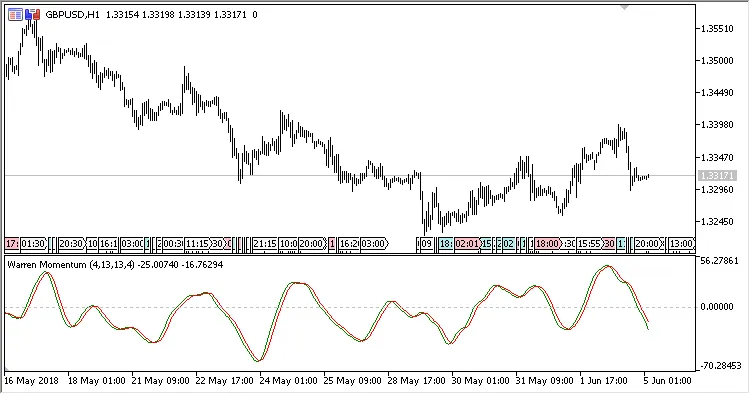
If you're looking to enhance your trading strategy, the WAMI indicator is worth your attention. Initially detailed by Anthony W. Warren in the April 1994 edition of S&C magazine, this momentum indicator has been a staple for many traders.
Let’s dive into the nitty-gritty. The WAMI indicator comes with nine key parameters that you can tweak to fit your trading style:
- First MA period - This defines the timeframe for the first moving average calculation.
- First MA method - This indicates the method used for the first moving average.
- Second MA period - This sets the period for the second moving average calculation.
- Second MA method - This specifies the method for calculating the second moving average.
- Third MA period - This is the period for the third moving average computation.
- Third MA method - This indicates how the third moving average is calculated.
- Signal MA period - This defines the period for the signal line calculation.
- Signal MA method - This indicates the method used for the signal line.
- Applied price - This is the price used for the calculations.
Here's how the calculations work:
WAMI = MA(MA2, Third MA period, Third MA method)
Signal = MA(WAMI, Signal MA period, Signal MA method)
Where:
MA2 = MA(MA1, Second MA period, Second MA method)
MA1 = MA(Difference, First MA period, First MA method)
And:
Difference = Price - PrevPrice
Understanding these calculations is crucial to effectively using the WAMI indicator in your trading strategies. Once you get the hang of it, you'll find it can greatly enhance your decision-making process.




Comments 0