
Let’s dive into the Hull Moving Average (HMA) and why it's become a favorite among traders using MetaTrader 4.
A Brief History:
By Alan Hull
Back in 2005, I was on a quest to create a new indicator when I stumbled upon a common issue: the lag in traditional moving averages. This curiosity led to the birth of the Hull Moving Average.
Since then, the HMA has made its mark in charting programs globally and is a hot topic on trading forums everywhere. I decided to share my findings in an article, which you can check out here.
The beauty of the HMA lies in its ability to respond quickly to price changes while still smoothing out the curve. In fact, it nearly eliminates lag while enhancing smoothness.
To grasp how it achieves this balance, let’s look at a simple moving average (SMA) chart over 16 weeks. You’ll notice it constantly lags behind price movements and lacks smoothness.
Hull Moving Average (HMA) Formula
Integer(SquareRoot(Period)) WMA [2 x Integer(Period/2) WMA(Price) - Period WMA(Price)]
Why Use the HMA in MetaTrader 4?
- Need for Speed: The Hull Moving Average, no matter how it’s calculated, is quite CPU-intensive. This version minimizes that by avoiding loops in its calculations.
- Customizable Speed: This variation allows you to set the 'speed' of the HMA, helping it better suit your trading style, especially since the original can sometimes overshoot.
- No Repainting: There are numerous versions of the Hull Average with different names, many of which repaint. This one is a reliable, non-repainting version.
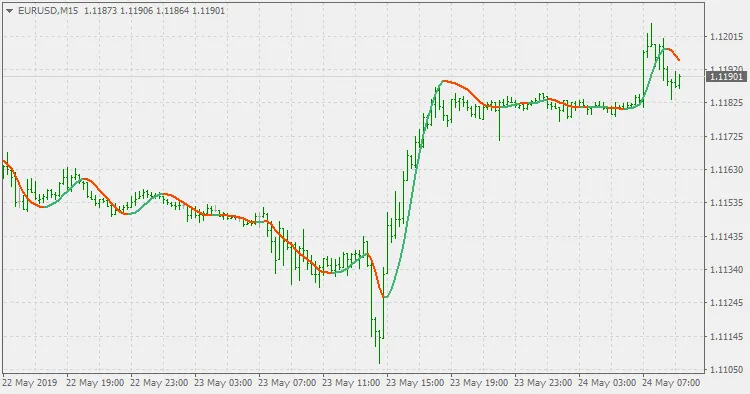
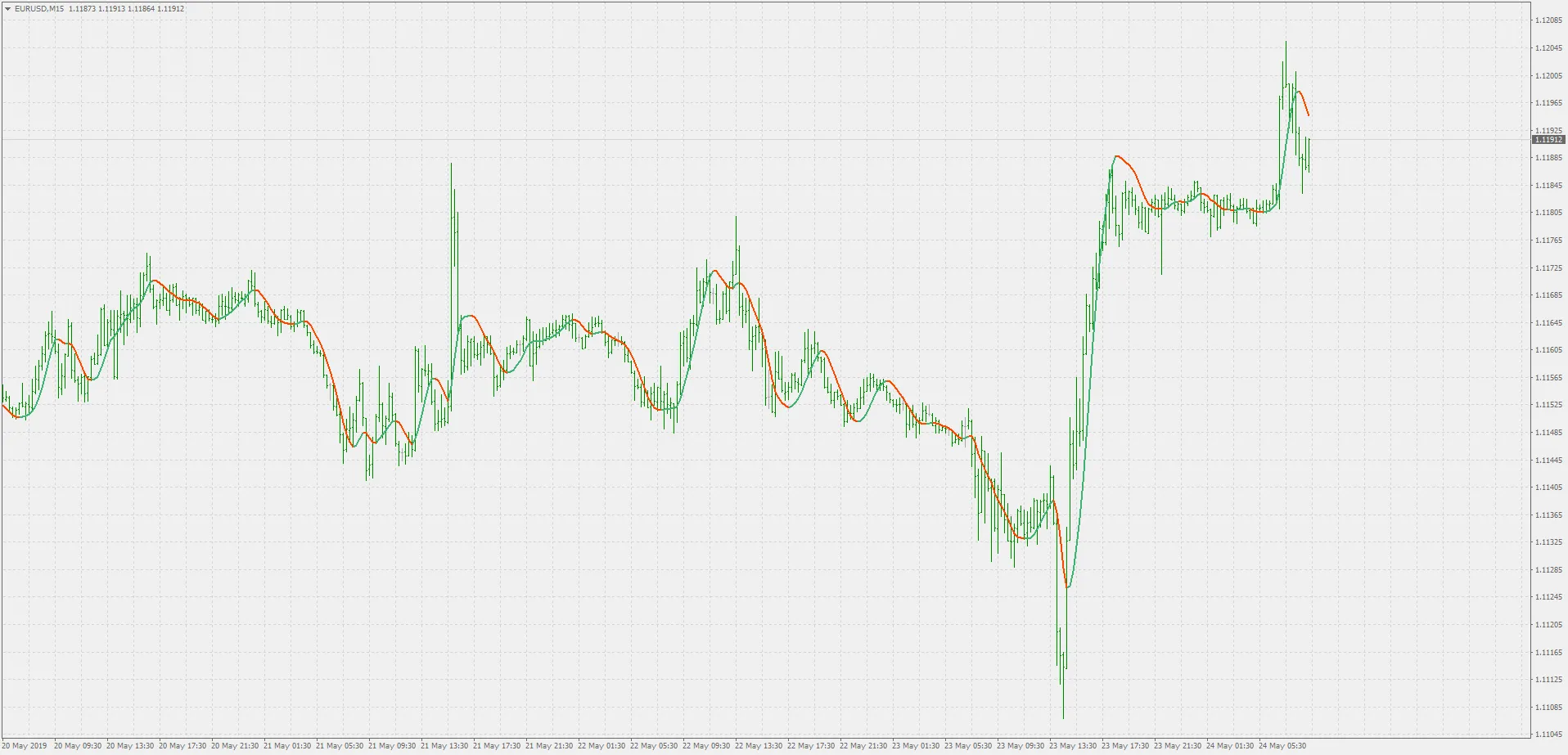
In conclusion, the Hull Moving Average is a powerful tool that can enhance your trading strategy in MetaTrader 4. Give it a try, and see how it can work for you!




Comments 0