
Hey there, fellow traders! Today, let’s dive into the exciting world of the Fibo Average2 indicator for MetaTrader 5. This powerful tool is the second iteration of the original Fibo Average indicator, and it’s designed to help you analyze price movements with finesse.
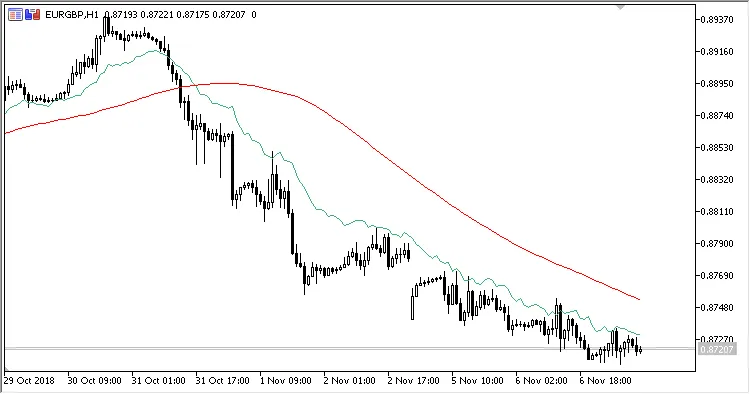
The Fibo Average2 showcases a moving average calculated from bar prices, shifted according to Fibonacci numbers. Not only does it present this first moving average, but it also includes a second moving average derived from the first, utilizing any of the eighteen different moving average calculation methods available. Talk about versatility!
Input Parameters Explained
Getting started with Fibo Average2 is a breeze. Here are the four key input parameters you’ll need to configure:
- MA Period - This is the period used for calculating the moving average.
- MA Method - Choose the method for calculating the moving average:
- Simple - Simple Moving Average
- Exponential - Exponential Moving Average
- Smoothed - Smoothed Moving Average
- Linear-Weighted - Linear Weighted Moving Average
- Wilder Exponential - Welles Wilder's Exponential Moving Average
- Sine-Weighted - Sine-Weighted Moving Average
- Triangular - Triangular Moving Average
- Least Square - Least Square Moving Average (LSMA)
- Hull MA by Alan Hull - Hull's Moving Average (HMA)
- Zero-Lag Exponential - Exponential Moving Average with Minimum Delay
- Instantaneous Trendline by J.Ehlers - John Ehlers' Trendline
- Moving Median - Moving Median
- Geometric Mean - Moving Average Based on Geometric Mean Method
- Regularized EMA by Chris Satchwell - Chris Satchwell's Regularized EMA Method
- Integral of Linear Regression Slope - Integral of Linear Regression Slope (ILRS MA)
- Combination of LSMA and ILRS - A combined moving average of LSMA and ILRS.
- Triangular MA generalized by J.Ehlers - John Ehlers' Triangular Moving Average
- Volume-Weighted - Volume-Weighted Moving Average
- FiboMA Applied Price - The price on which the FiboMA is applied.
- Fibo Count - The number of Fibonacci numbers used to calculate FiboMA.
Sample Calculation
Let’s break it down with a quick example. If your Fibo count (FiboCount) is set to 8, the calculation looks like this:
FiboMA = (Price[i] + Price[i+1] + Price[i+2] + Price[i+3] + Price[i+5] + Price[i+8] + Price[i+13]) / FiboCount
MA = MA(FiboMA, Period, Method)
In this formula:
Price = FiboMA applied price




Comments 0