
Hey traders! I was on the hunt for a standalone function or indicator for the Root Mean Square (RMS) and, lo and behold, I couldn't find one. So, I decided to create it myself and share it with all of you!
The RMS (Root Mean Square) value is determined by squaring the values, averaging those squared values, and then taking the square root of that average. This method is particularly useful when analyzing waveforms, especially in electrical engineering.
Also known as the quadratic mean, represented as 𝑀2, this calculation has its place in various trading strategies.
Things to keep in mind if you’re looking to use RMS:
I’ve noticed some traders implementing the Quadratic Mean as a moving average, but often overlook comparisons to other averages.
It’s important to note that RMS or Quadratic Mean equates to the SMA (Simple Moving Average) when applied to a dataset that consists only of zero or positive values.
However, if there’s even a single negative value in your dataset, the outcome will be skewed. This is due to the way the formula is constructed, making it unsuitable as a regular moving average without that restriction.
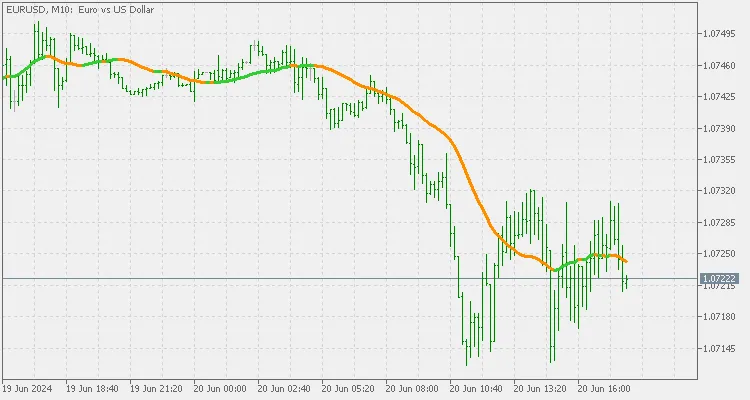

So, there you have it! The RMS indicator can be a valuable tool for your trading toolkit, just remember to use it wisely!




Comments 0