Technical Indicator

Unlocking Profit Potential with the Schaff Trend Cycle Indicator
MetaTrader4
Unlocking Profit Potential with the Schaff Trend Cycle Indicator

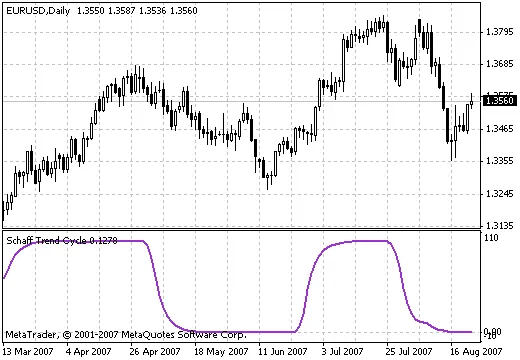
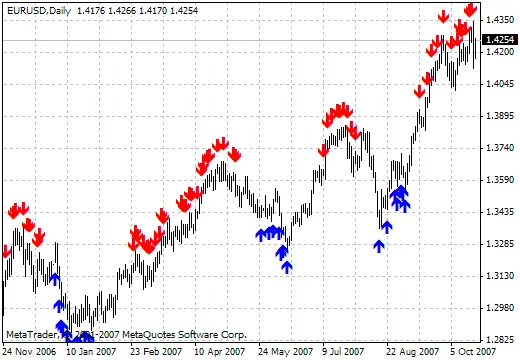
Hey traders! Today, we’re diving into a powerful tool that can help you navigate the markets more effectively: the Schaff Trend Cycle Indicator. Whether you’re a seasoned pro or just starting out, this indicator can provide valuable insights into market trends.So, what exactly is the Schaff Trend Cycle? In a nutshell, it’s a momentum-based oscillator that combines elements of the traditional Stochastic and the MACD (Moving Average Convergence Divergence) indicators. This makes it a fantastic choice for traders looking to identify potential reversals and entry points.How Does It Work?The Schaff Trend Cycle operates on two primary components:Trend Identification: It helps you spot whether the market is in an uptrend or downtrend.Cycle Analysis: It indicates the cyclical nature of price movements, allowing you to time your trades more effectively.By analyzing the interactions between the Schaff Trend Cycle and price movements, you can make more informed decisions and potentially increase your profitability.Why Use the Schaff Trend Cycle?Here are a few reasons why this indicator is worth your attention:Versatility: It can be used across various markets, including Forex, stocks, and commodities.User-Friendly: The interface is straightforward, making it accessible for traders of all skill levels.Enhanced Accuracy: It combines multiple indicators into one, giving you a clearer picture of market dynamics.In conclusion, the Schaff Trend Cycle Indicator is a valuable addition to your trading toolkit. By incorporating it into your strategy, you can gain better insights and improve your trading outcomes. Happy trading!

2008.01.08
Understanding the Chaikin Indicator: A Trader's Guide
MetaTrader4
Understanding the Chaikin Indicator: A Trader's Guide

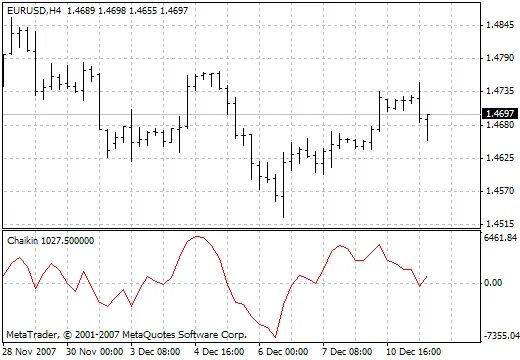
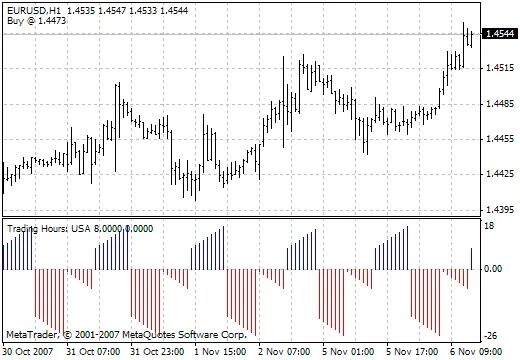
What is the Chaikin Indicator? The Chaikin Indicator is a powerful tool in technical analysis that helps traders assess market momentum and price trends. Developed by Marc Chaikin, this indicator combines the concepts of price and volume to give you deeper insights into market behavior. How Does it Work? The Chaikin Indicator focuses on the accumulation/distribution line, which indicates the buying and selling pressure in the market. By analyzing this line, traders can identify potential trend reversals or continuations. It’s especially useful for spotting divergences between price action and the indicator itself. Key Features of the Chaikin Indicator Volume-Weighted: The indicator takes into account the volume, making it more reliable than price alone. Trend Confirmation: It helps confirm existing trends, giving you more confidence in your trading decisions. Divergence Signals: Look for divergences between the indicator and price to spot potential reversals. How to Use the Chaikin Indicator in Your Trading To get the most out of the Chaikin Indicator, consider the following tips: Combine it with other indicators for better accuracy. Pay attention to overbought and oversold levels. Use it to confirm entries and exits in your trades. Final Thoughts The Chaikin Indicator can be a game-changer for traders looking to enhance their technical analysis toolkit. By understanding its mechanics and applying it effectively, you can improve your trading strategy and make more informed decisions. Happy trading!

2007.12.13
Understanding Signal Direction Probability for Smarter Trading Decisions
MetaTrader4
Understanding Signal Direction Probability for Smarter Trading Decisions

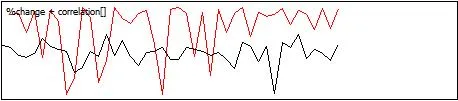
Hey there, fellow traders! Today, let's dive into a fascinating tool that can help you sharpen your trading strategy: the Signal Direction Probability indicator. Description: This nifty indicator measures the percent change between past closing prices over a defined period. It then displays this percent change as a signal in the indicator window. Once the percent change is calculated, it also assesses the correlation between the price signal and the percent change. You’ll notice a red line representing the correlation and a black line signifying the percent change. Now, you might be wondering, why is this important? Well, the correlation gives us valuable insights into potential price movements. In theory, if there’s a strong correlation (greater than 0.7) between the percent change and the price signal, it’s likely that the price will continue in that direction. For instance, if we see an upward price signal and a high correlation (red line), it’s a good bet that the price will keep climbing, generating a buy signal. Conversely, if the correlation indicates a high value while the price signal is trending downward, that’s our cue for a sell signal. Just a quick heads-up: for the correlation line (red line) to show up, the indicator needs at least two ticks. The first tick calculates the percent change, and the second one computes the correlation between price change and the price signal. Image:

2007.11.21
Understanding Pivot Points: Your Guide to Market Turning Points
MetaTrader4
Understanding Pivot Points: Your Guide to Market Turning Points

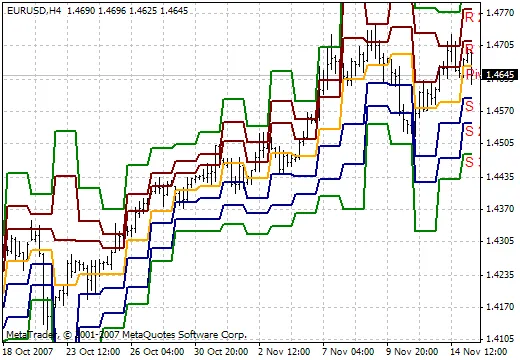
Author: Aborigen Description: Pivot Points are crucial indicators that can help traders identify key turning points in market price movements. These levels can be applied across various liquid markets with stable price ranges, making them particularly effective in futures trading and Forex. When a market trends, the price often oscillates from a Pivot Point to the first or second support or resistance levels. Notably, the second support or resistance area is frequently regarded as a target for price movement, providing traders with valuable insight. In many cases, prices will navigate between the first support and resistance levels within a defined range, with the Pivot Point acting as the central axis for price rotation. This is where things can get interesting! One challenge traders face is needing a solid foundation for entering trades. Finding a starting point where the market might reverse or adjust is vital. This is where Pivot Points, along with their associated support and resistance levels, come into play, offering traders a reliable tool for making informed decisions. Of course, it’s essential to remember that market behavior can be unpredictable. Prices can break through these levels, reverse unexpectedly, or sometimes not even reach the anticipated level before turning. This volatility is just part of the game. However, despite these quirks, Pivot Points have proven their worth and remain a popular tool among traders.

2007.11.16
Understanding the R-Squared Indicator for Better Trading Decisions
MetaTrader4
Understanding the R-Squared Indicator for Better Trading Decisions

The R-Squared indicator is a handy tool that helps traders gauge how closely a stock's prices correlate with its linear regression line. Values nearing 1.0 indicate a strong relationship, while those closer to 0.0 suggest a weak connection. For more in-depth guidance, check out the Metastock Help resources. When you're looking to determine if a trend is statistically significant for a specific period, plotting the R-Squared indicator is essential. Below, you'll find a table that outlines the critical R-Squared values needed for a 95% confidence level across various timeframes. If your R-Squared value falls below these critical thresholds, it may indicate that the prices are not showing a statistically significant trend. Critical R-Squared Values for 95% Confidence 5 periods: 0.77 10 periods: 0.40 14 periods: 0.27 20 periods: 0.20 25 periods: 0.16 30 periods: 0.13 50 periods: 0.08 60 periods: 0.06 120 periods: 0.03 Keep in mind, if you see the R-Squared indicator reaching extreme levels, it might be worth considering a short-term position against the prevailing trend. For instance, if the slope is upward, and the R-Squared exceeds 0.80 but starts to decline, it could be a signal to sell or open a short position. There are various strategies to leverage the outputs of R-Squared along with the slope in your trading systems. If you're looking for a deeper dive into these concepts, I recommend checking out "The New Technical Trader" by Tushar Chande and Stanley Kroll for more insights.

2007.11.14
Unlocking the Alternative Ichimoku: A Fresh Approach for Forex Traders
MetaTrader4
Unlocking the Alternative Ichimoku: A Fresh Approach for Forex Traders

Hey fellow traders! Today, I want to dive into an intriguing tool that's been making waves in the forex community: the Alternative Ichimoku. This indicator is designed as a fresh take on the classic Ichimoku Kinko Hyo, and it can really sharpen your trading strategy. If you're looking to forecast prices more accurately, I recommend using both the Ichimoku Kinko Hyo and the Alternative Ichimoku on the same timeframe. This combo can give you a more precise outlook on market movements. The Alternative Ichimoku was specifically developed for trading major currency pairs, rather than stocks. Here’s a quick look at some currency pair profiles that the author has tested: EURGBP: 4H - SSP: 44, SSK: 38 CADCHF: 4H - SSP: 62, SSK: 52 CADJPY: 4H - SSP: 48, SSK: 36 GBPUSD: 4H - SSP: 44, SSK: 36 GBPCHF: 4H - SSP: 34, SSK: 29 GBPJPY: 4H - SSP: 36, SSK: 29 EURUSD: 4H - SSP: 34, SSK: 34 EURCHF: 4H - SSP: 72, SSK: 50 EURJPY: 4H - SSP: 72, SSK: 36 USDCAD: 4H - SSP: 24, SSK: 60 USDCHF: 4H - SSP: 34, SSK: 29 USDJPY: 4H - SSP: 34, SSK: 29 So, what sets the Alternative Ichimoku apart from its predecessor? The main difference lies in the shorter calculation periods it uses. This feature allows you to interpret a currency's entry into the cloud as a potential signal rather than a definitive indication of a trend reversal. Now, let's talk about some key values: When prices are above the cloud, it indicates a strong trend. Entering the cloud signals a potential shift. If prices are moving inside the cloud, we’re likely in a range-bound market. Another notable difference is that the Alternative Ichimoku doesn’t include Kijun and Tenkan lines. Instead, it has a stop-order line within the cloud, which helps you determine where to place your stops. Crossing this line signals a possible change in market direction. Moreover, in the upper left corner, you’ll find the current volatility value, which represents the price range for the current period. This is calculated by taking the difference between the maximum and minimum over a doubled calculation period. On March 26, 2007, a new version of the Alternative Ichimoku (v06) was released. This update improved the display of the indicator line, ensuring it doesn't obscure candlesticks unless the "chart on top" option is enabled. Additionally, it introduced parameters for tracking currency rate changes during a reporting period, making it easier to estimate stop orders when deciding to open a position. Then, on April 9, 2007, the Alternative Ichimoku received another update (v07). This version added an optional middle line within the Ichimoku cloud. If you want to enable this feature, simply change false to true. The crossing of this middle line with the stop-order line is reminiscent of Kijun and Tenkan crossings, but having four lines in one indicator can be a bit overwhelming. That’s why the middle line is optional! In summary, the Alternative Ichimoku offers a unique perspective for forex traders looking to enhance their strategies. Whether you're a seasoned trader or just starting, this tool can provide valuable insights into market movements. Happy trading!

2007.09.19
First Previous 387 388 389 390 391 392 393 394 395 396 397 Next Last